EP47 - Lost Millions in IT? Here's the 300% Stock Surge Playbook Auditors Loved 😍
Hey there, digital warriors! ⚔️
This article continues our deep dive into enterprise evolution, following the journey started in Episode 43. We’ve explored how a struggling IT organization transformed from a chaotic cost center into a high-performing strategic asset. In Episodes 45 and 46, we deep-dived, showcasing how OKRs, when infused with behavioral engineering and our Dojos’ Ecosystem, became the driving force behind alignment and execution. OKRs evolved into a continuous performance accelerator, ensuring that both strategic direction and tactical execution were seamlessly connected. Now, in this final installment, we reveal the ultimate validation of this evolution—an independent audit by PwC.
🚧 From Misalignment to Mastery: The Governance Overhaul
Audits. The mere word sends shivers down the spines of IT leaders and executives alike. Because let’s face it—auditors don’t care about your effort, your good intentions, or the pretty slides your consultants put together. They care about measurable outcomes. They want proof that your organization isn’t just spinning in circles with the latest buzzwords but actually delivering tangible results.
And that’s exactly what we proved. When PwC stepped in for the audit, their conclusion was clear:
“This is one of the best-executed transformations we’ve ever assessed.”
So, how did we go from an organization on the brink of irrelevance to a benchmark for excellence? Let’s break it down.
By the time the auditors walked in, we weren’t hoping for a win—we knew we had already won. Why? Because the Unicorns’ Ecosystem guiding the OKRs governance had done the heavy lifting for us. The entire organization—from strategy to execution—was running on two synchronized layers of behavioral-driven OKRs:
☝️ Strategic OKRs: Set at the leadership level, ensuring the long-term vision and business priorities were clear, measurable, and actionable.
✌️ Tactical OKRs: Designed for teams on the ground, bridging the gap between technical execution and business impact.
The effect?
No more guesswork. No more misalignment. Just raw execution power paired with technical excellence and customer satisfaction obsessiveness.
Every initiative, every decision, every line of code had a clear, traceable link to a business goal 🎯. It wasn’t just a methodology shift—it was a cultural rewiring that made purpose, accountability, and impact-driven work the default mode of operation.
And PwC noticed.
🏛️ The Auditors’ Verdict: What Set This Apart?
When PwC teams went deep into our governance structures, they expected to find what they see in 90% of IT organizations:
❌ Misalignment between leadership and teams.
❌ Vanity metrics that don’t connect to business outcomes.
❌ Inefficient, bloated processes that create bottlenecks instead of accelerating delivery.
But instead, they found something different:
✅ Every technical effort mapped directly to a strategic business objective.
✅ OKRs were not a theoretical exercise—they were actively driving execution at both strategic and tactical levels.
✅ Behavioral markers were built into the system, ensuring that alignment wasn’t just on paper but reinforced dailyin how teams operated.
✅ A corporate-level DORA metric aggregated elite teams’ socio-technical mastery, measuring efficiency across the company.
✅ These elite teams were directly linked to product/service efficiency, showcasing real value creation beyond IT outputs.
✅ OKRs paired with financial metrics provided transparency, fueling a dynamic cycle of socio-technical mastery and customer obsession, which in turn drove exponential growth and maximized ROI. By integrating these financial indicators, the governance framework ensured a wealth of sustainable expansion, aligning elite teams’ efficiency with tangible business value creation.
🚀 “The way OKRs have been engineered here ensures they aren’t just a governance mechanism—they are a continuous performance accelerator.” — PwC Lead Auditor
This wasn’t just a successful audit—it was a new benchmark for IT governance.
📈 The Business Impact: Hard Numbers, Real ROI
The transformation wasn’t just about internal changes—it translated into financial performance. Let’s compare the data from when we started to today.
The Old DNA 🧬
-
Challenges: High inefficiencies, fragmented decision-making, and a reliance on outdated methodologies that created bottlenecks rather than driving innovation.
-
Declining Market Trust: Legacy business models struggled to keep pace with modern digital-first competitors, resulting in missed market opportunities and eroding customer confidence.
-
Lack of Measurable Success: Efforts were often reactive, driven by short-term fixes rather than long-term strategy, leading to operational stagnation and financial unpredictability.
The New DNA 🧬
-
Revenue Realignment: A strategic pivot towards high-margin digital solutions, ensuring sustainable and scalable revenue streams.
-
Operational Cost Efficiency: Governance improvements led to double-digit percentage reductions in operational costs, freeing capital for reinvestment into innovation.
-
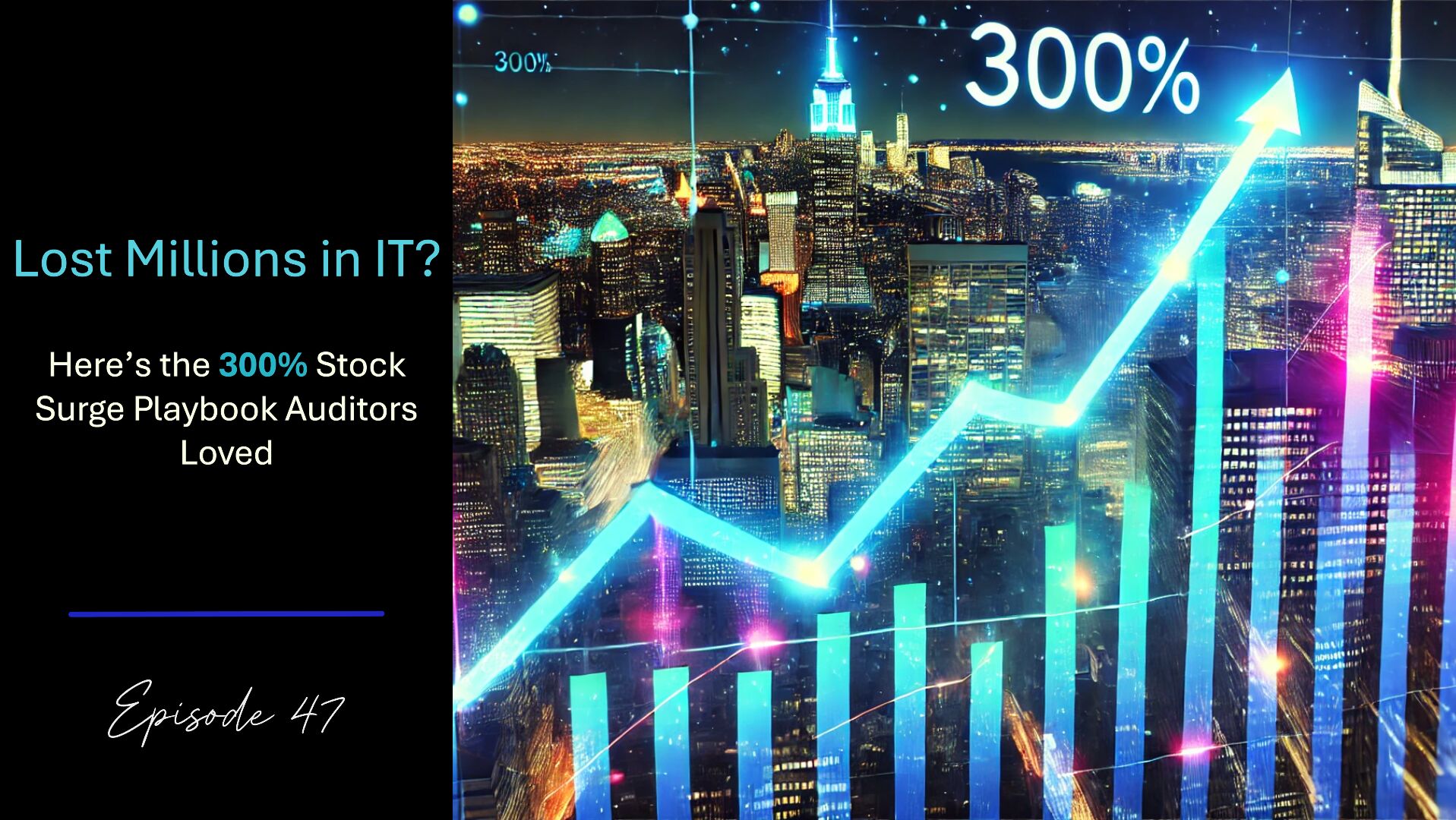
Stock Performance: The company’s stock price surged by nearly 300% since the transformation began, with financial analysts forecasting a further 20% ulterior growth potential, reinforcing strong investor confidence.
-
Investor Confidence: Analysts project sustained growth due to a structured, data-driven approach to governance and execution, reinforcing trust from shareholders and financial stakeholders.
-
Enhanced Agility: By embedding socio-technical mastery within governance structures, the organization significantly reduced time-to-market for new innovations, directly impacting competitive advantage.
👉 What changed? Governance + OKRs + Financial Oversight.
By balancing strategic oversight and technological evolution, this organization didn’t just keep up—it redefined itself in the global digital landscape. This transition from a legacy cost center to a digital powerhouse is what set it apart and made its stock a strong long-term investment.
🔑 The Lesson: IT Can’t Afford to Be an Afterthought
For years, IT has been treated as a cost center—a necessary evil rather than a strategic driver of business growth. This case proves that when IT is properly engineered, it becomes a competitive advantage.
📈 OKRs, when designed through behavioral engineering, don’t just measure progress—they drive it.
So here’s the question for every C-executive level, board member, and investor reading this:
📌 Is your IT organization creating measurable business impact, or is it just another cost center 💸?
Because if you’re still treating IT as a liability, you’re already losing ground to competitors who aren’t. In fact, those who failed to evolve digitally have already been swept out of the market—another casualty of the last two decades of technological upheaval. Companies still anchored to outdated brick-and-mortar business models are simply doomed in this new AI-driven era.
⏭️ What’s Next?
This concludes our real-world case study of IT evolution—but we’re just getting started. In our next article, we’ll dive deeper into the behavioral markers that played a pivotal role in this transformation. We’ll explore how these insights helped identify and resolve the organizational bottlenecks that hindered efficiency, unlocking new levels of agility and performance.
Stay tuned, warriors. The next evolution is about turning crisis into opportunity—where behavioral design meets business impact. 🔥
📩 Ready to evolve your organization?
If you’re tired of your IT portfolio being a wasteland of missed opportunities and disillusioned teams, it’s time to join our research. Contact us 📬 to turn your desert 🌵 into a lush forest 🌳 of passion, innovation, and profitability. Embrace the Unicorns’ Ecosystem—and see how IT can become your company’s greatest asset.
—
To stay in the loop with all our updates, be sure to subscribe to our newsletter 📩 and podcast channels 🎧:
🎥 YouTube
📻 Spotify